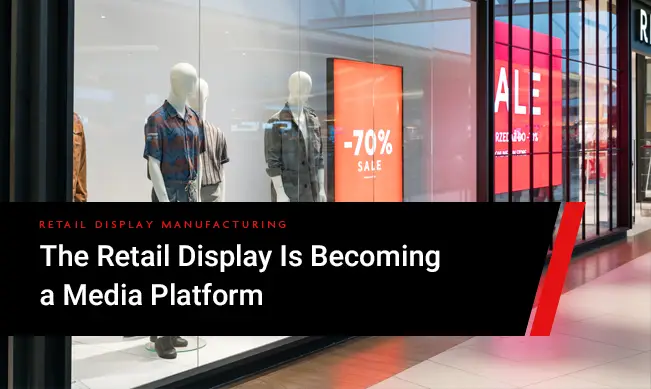
The line between retail display and retail media is getting harder to see.
Major retailers are putting more digital screens into physical stores, using entrances, aisles, endcaps, departments, and other high-traffic areas to deliver advertising and product messaging closer to the point of purchase.
Walmart, Amazon, Kroger, Walgreens, and other large retailers are part of this shift. At Walmart, Store Ads now include digital screens alongside audio and experiential advertising throughout the shopping trip. Amazon offers digital signage advertising across Amazon Fresh and Whole Foods Market, including screens at entrances, in aisles, on endcaps, and in departments. Kroger has also been expanding digital screens integrated into custom fixtures.
The investment behind these networks is growing, too. Looma recently secured $10 million in Series B financing plus a $3 million credit facility to expand its in-store screen network, which spans approximately 1,100 retail locations.
For brands and shopper marketing teams, the takeaway goes beyond advertising.
The retail display is increasingly becoming a physical media platform.
That means the next generation of point-of-purchase displays may need to combine the fixture, screen, product, graphics, content, shopper interaction, and store environment into one coordinated merchandising system.
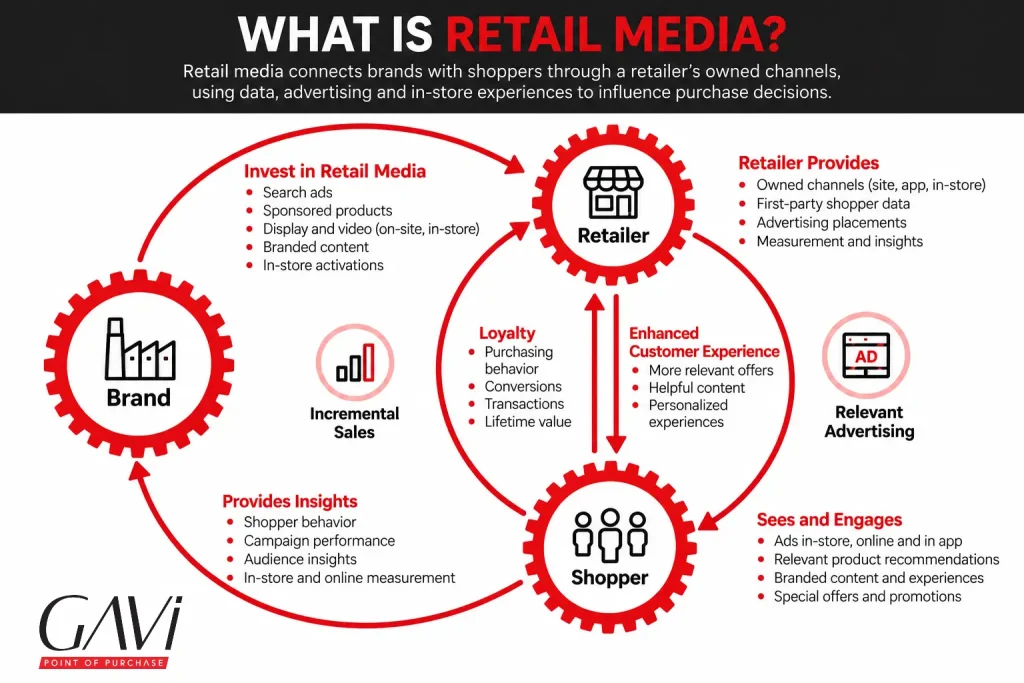
In-Store Retail Media Is Moving Closer to the Product
Retail media grew largely through digital channels, giving retailers new ways to monetize first-party shopper relationships and allowing brands to connect advertising more directly with commerce.
Now more of that model is entering the physical store.
Amazon says its in-store digital signage network spans more than 600 U.S. grocery locations and includes more than 10,000 active screens. Its available placements include entrances, endcaps, aisles, prepared-food areas, dairy departments, and other points along the shopper journey.
Walmart similarly positions its Store Ads around reaching shoppers throughout the physical shopping trip. The retailer says digital ads are placed prominently across store areas, with the objective of reaching customers closer to purchase and measuring the resulting sales impact.
Kroger offers an especially relevant example for anyone involved in POP display development. Its in-store media initiative has included digital screens built into custom fixtures rather than treating screens as separate equipment added after the merchandising system is designed. Kroger has described the approach as blending retail design with advertising technology.
That distinction matters.
A screen mounted somewhere in a store is digital signage. A screen designed around the product, fixture, brand, shopper, and retail environment can become part of the merchandising experience.
The Opportunity Is Bigger Than Adding a Screen to a Display
As digital content moves deeper into stores, brands face a physical design challenge.
A screen still needs somewhere to live.
The display has to accommodate the technology while continuing to perform all of its traditional merchandising jobs: holding product, creating visibility, communicating the brand, fitting the allocated footprint, supporting shopper interaction, and surviving everyday retail use.
Simply attaching a monitor to an existing fixture can create compromises in appearance, functionality, maintenance, and product presentation.
A digitally integrated POP display should instead be considered as a complete system.
Fixture + screen + product + graphics + content + shopper flow.
Thinking about those components together changes the design process.
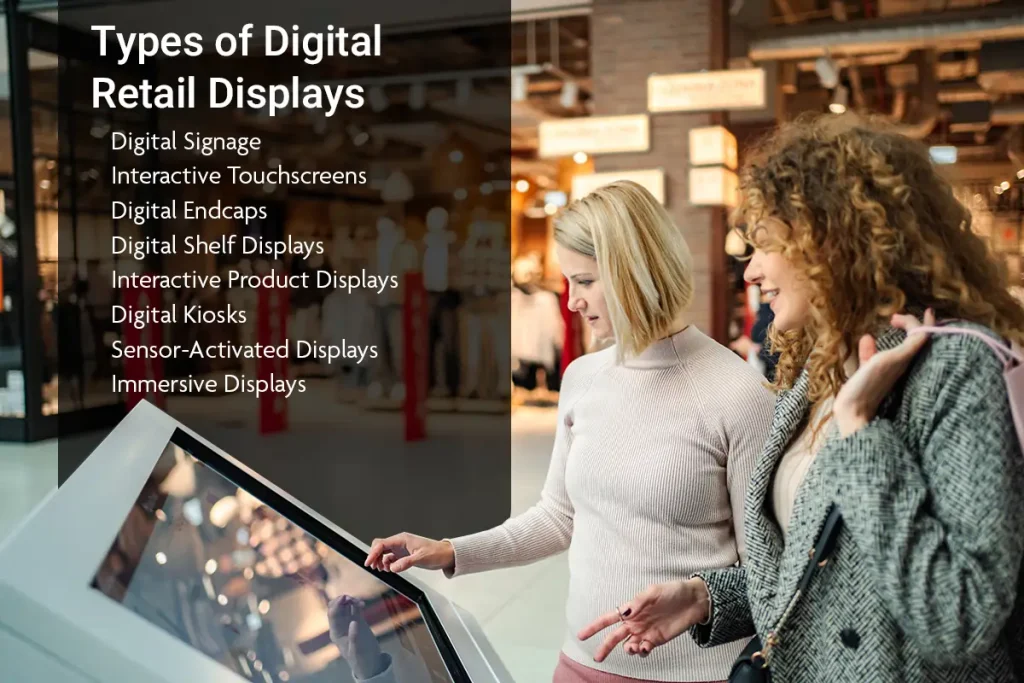
What Brands Should Consider When Designing Displays With Digital Screens
Where should the screen live?
Screen placement affects both visibility and usability.
A display viewed from several feet away may benefit from a larger screen positioned high enough to attract attention. A display designed for product education may need the screen closer to eye level or directly adjacent to the merchandise.
The right placement depends on the retail environment, expected viewing distance, shopper traffic, product location, and purpose of the content.
Screen placement should therefore be established during display development rather than treated as a final accessory.
Does the display still merchandise the product effectively?
Digital content can attract attention, but the product remains central to most POP programs.
The screen cannot consume so much space that the display loses product capacity, makes merchandise difficult to access, or creates confusion about what shoppers are supposed to do next.
The physical and digital hierarchy should work together.
A shopper might first notice motion on the screen, then see the product, understand its benefits, compare options, and make a selection. Display design can help make that progression intuitive.
How will power, cables, ventilation, and components be managed?
Once electronics enter a fixture, engineering requirements change.
Power supplies and cables may need to be routed through or concealed within the structure. Electronic components need secure mounting. Some equipment may require ventilation or clearance. Components also need to remain accessible when maintenance is required.
These considerations can affect materials, panel construction, dimensions, assembly methods, and shipping.
Addressing them during engineering helps avoid the appearance of technology being added as an afterthought.
How will the display be serviced?
Retail displays live in working environments.
Screens can require replacement. Media players may need attention. Cables can become damaged. Products must be replenished. Graphics change. Store associates may need access to components without dismantling the fixture.
A well-engineered digital display should account for those realities.
That can mean removable access panels, replaceable components, protected cable paths, modular assemblies, or other features designed around the expected service requirements.
Can physical graphics and digital content change independently?
One of digital media’s advantages is the ability to update messaging without replacing the entire display.
That advantage becomes more useful when the physical fixture is designed for flexibility, too.
A longer-life fixture, for example, might use replaceable printed graphics alongside a digital screen. Brands can then update campaigns, promotions, product information, or creative content while retaining the core structure.
This approach can be especially valuable for programs expected to remain in stores across multiple campaigns or product launches.
Can the concept scale across different store formats?
A successful prototype is only the beginning of a large retail program.
The same brand may need an endcap in one store, a freestanding fixture in another, and a smaller footprint elsewhere. Electrical access, sight lines, aisle dimensions, and merchandising requirements can also vary.
Designing a modular system around shared components can make it easier to adapt a digitally integrated concept to different footprints while maintaining a consistent brand experience.
Planning a Digitally Integrated Retail Display?
Planning an interactive or digitally integrated retail display? GAVI can help engineer the physical platform around the technology, from design and prototyping through manufacturing and rollout.
Digital Displays Still Have to Work in the Physical World
The growth of in-store retail media does not make traditional display engineering less important. It arguably makes it more important.
Screens introduce another layer of requirements into an environment that already has significant constraints.
The fixture still needs appropriate structural strength. Products need to fit correctly. Materials need to suit the application. Assembly should be practical. The display must survive the intended retail environment. Packaging and shipping have to protect both the fixture and, where applicable, sensitive components.
These issues are difficult to solve after a display has already been designed.
That is why digital integration benefits from beginning during concept development and continuing through engineering and prototyping.
Before production, teams can evaluate questions such as screen position, component fit, product capacity, access, stability, assembly, cable routing, graphics placement, and overall shopper interaction.
A prototype can then test whether the system works as intended in physical space.
The Store Is Becoming More Measurable, but It Still Has to Be Shoppable
The commercial appeal of in-store retail media is understandable.
Physical stores account for a substantial share of retail purchasing, yet historically they have offered fewer of the targeting, content management, and measurement capabilities associated with digital commerce.
Retail media networks are trying to narrow that gap. An IDC white paper sponsored by Amazon, for example, identifies in-store digital signage as one of the emerging channels retailers are using as retail media networks expand.
But introducing more media into stores creates an important design responsibility.
The technology should support the shopping experience rather than compete with it.
A store filled with screens does not automatically become a better retail environment. Screens need a clear purpose and should appear where their content can help attract attention, explain a product, reinforce a promotion, aid navigation, or otherwise contribute to the shopper’s experience.
For brands, that means evaluating the display from both perspectives:
What should the shopper see on the screen, and what should the shopper be able to do at the fixture?
Both questions matter.
Designing the Physical Platform Around the Technology
For more than 30 years, GAVI Point of Purchase has worked with brands and retail partners on custom merchandising displays, with capabilities spanning display design, engineering, digital prototyping, physical prototyping, manufacturing, and rollout support.
Interactive retail displays are already part of that work. GAVI can develop displays incorporating touch screens, standard video screens, product demonstration areas, branded visual elements, and physical interactive components.
As in-store retail media expands, these capabilities increasingly intersect.
A brand planning a screen-enabled endcap, interactive product display, digital merchandising station, or other connected fixture needs more than a place to mount a monitor. It needs a physical system engineered around the product, technology, retail environment, and shopper.
That starts by considering the technology at the beginning of the display-development process, not after the fixture has been designed.
The Next Generation of POP Is Physical and Digital
Digital screens are unlikely to replace physical merchandising. The more significant development is the convergence of the two.
The fixture provides structure, product access, brand presence, and physical interaction. The screen adds a flexible communication layer that can change by campaign, product, location, or moment.
When those elements are designed together, brands have an opportunity to create retail experiences that are more adaptable without losing sight of the basic job of a display: helping shoppers find, understand, interact with, and ultimately purchase products.
As retail media moves further into the aisle, the question for brands is no longer simply whether to use a fixture or a screen.
It is how to make the fixture, screen, content, merchandise, and shopper experience work as one system.
FAQs
An interactive retail display is an in-store merchandising system that encourages shoppers to engage with products, digital content, demonstrations, or other branded elements. It can include video screens, touch screens, physical interactive features, or a combination of digital and traditional merchandising.
Yes. Screens can be incorporated into endcaps, freestanding displays, product fixtures, demonstration stations, and other POP formats. Screen dimensions, power, cable management, component access, ventilation, product placement, and service requirements should be considered during design and engineering.
Integrating the screen during fixture development allows the physical and digital elements to be designed as one system. This can improve screen placement, cable management, aesthetics, product accessibility, structural planning, and serviceability.
Prototyping can be particularly valuable for digitally integrated displays because teams can evaluate component fit, product placement, shopper interaction, access, stability, appearance, and assembly before committing to full production.